
Blog is one of the best ways to share your knowledge, build an online presence, and even earn money online. Whether you want to start a blog as a hobby or turn it into a full-time career, the process is simpler than most people think.
In this guide, you’ll learn how to start blog from scratch, even if you have zero technical skills.
What is a Blog?
Blog means creating and publishing content (articles or posts) on a website regularly. These posts can be about technology, travel, fashion, education, finance, health, or any topic you are passionate about.
A blog helps you:
- Share information and ideas
- Build authority in your niche
- Drive traffic from Google and social media
- Earn money through ads, affiliate marketing, and sponsorships
Why start a Blog?
Many people think blogging is “dead.” The truth? Blogging is evolving, not disappearing.
Benefits of blogging in 2026:
- Free traffic from Google
- Long-term passive income potential
- Build authority and trust
- Support YouTube, Instagram, and business growth
- AI tools make content creation faster
If you stay consistent and provide value, blogging still works amazingly well.
How to Start a Blog In 10 Steps:
- Choose a blogging platform. Use a platform that offers customizable templates.
- Pick hosting platform. Consider a platform with good bandwidth, uptime and customer support.
- Find the right niche. Narrow down your theme and have a specific audience in mind.
- Select a blog name and domain. Choose a descriptive name that piques readers’ interests.
- Set up and design your blog. Include imagery and effects that reflect your theme.
- Brainstorm blog topics. Write down all your ideas before narrowing down topic selections.
- Write your first blog post. Engage your audience with a killer title and use headers to make the content skimmable.
- Create an editorial calendar. Create a calendar to help you publish consistently and hold yourself accountable.
- Promote your blog. Use marketing strategies to expand your reach.
- Make money blogging. Take advantage of opportunities to monetize your blog.
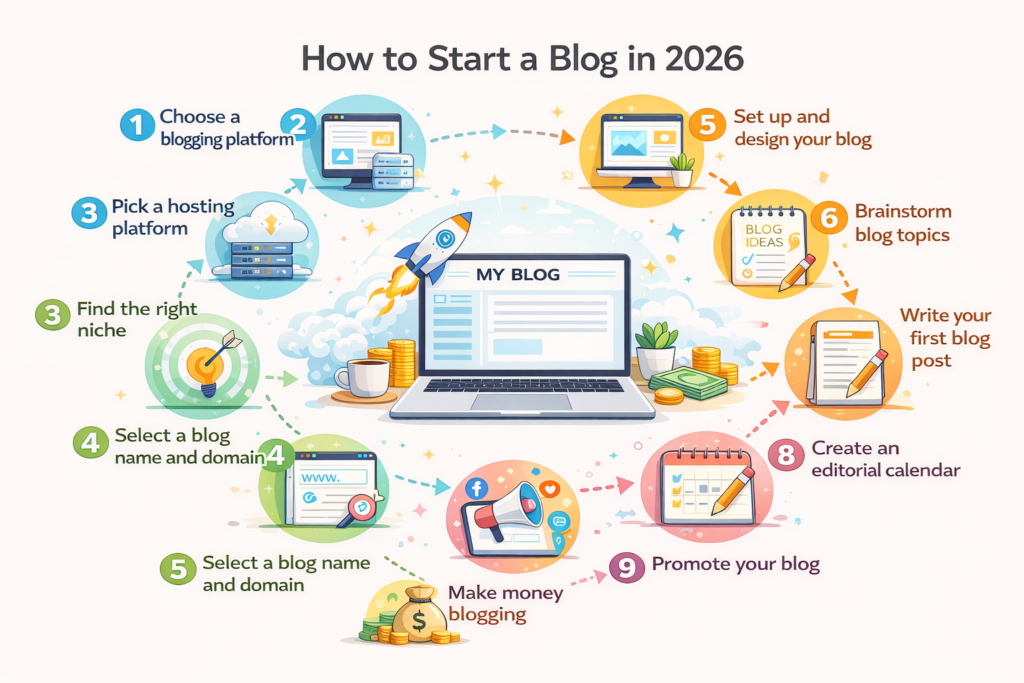
In this complete how to blog A to Z tutorial, we’ll cover everything from choosing your blogging platform to making money from your written work. With a little bit of guidance, you can get your blog online in 30 minutes or less.
This is going to be the most comprehensive advice you’ll find on building a successful blog from scratch. If you want to start a blog fast, though, feel free to use the numbered steps above as a quick cheat sheet. You can go directly to the step you need the most help with, or grab a cup of coffee and read it all the way through.
Let’s start your blog!
01. Choose a blogging platform
If you’re here, you’re likely curious about how to get started—and you’re in the right place. The first step in starting a blog is to select a blogging platform or Content Management System (CMS) for publishing your content. A quick Google search will show you that there are several different sites available that suit bloggers from all industries.
There are many blogging platforms, but WordPress.org is the most recommended.
Why WordPress?
- Free and open-source
- Beginner-friendly
- SEO-optimized
- Thousands of themes and plugins
- Full control over your website
The blog you’re reading is actually built on WordPress.org, a free website builder I highly recommend for new and seasoned bloggers. WordPress blogging platform is fairly straightforward to get the hang of, and it offers a variety of attractive design options and templates to work with. In addition, it comes with features to analyze your blog’s performance and monetize your content, which will come in handy as you setup your blog and build your readership.
02. Pick a hosting platform
Once you select your preferred blogging platform, you’ll need to choose a hosting platform. A blog, like other types of websites, requires a host. This essentially stores websites on a server under a unique address so that visitors can easily reach them.
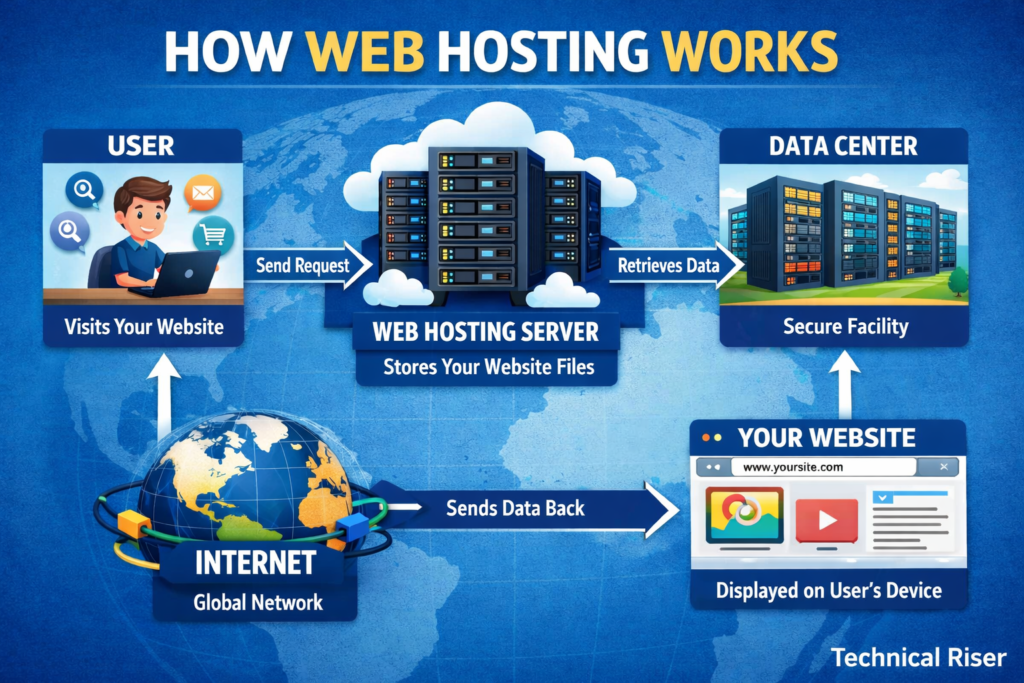
On some blogging platforms, hosting is already included, so you won’t need to find a separate web host when setting up your blog. In that case, you can skip this step and move to Step 3.
With other blog builders, such as WordPress, you will need to find and pay for a separate web hosting platform. Some popular options include:
- Hostinger
- BlueHost
- HostGator
- GoDaddy
- DreamHost
If you’re not sure which web hosting platform to choose, take into account these factors:
- Uptime: The amount of time that the server hosting your website is up and running. A strong uptime rate (99.95% or above) is a good indication that the host’s servers perform well.
- Bandwidth: The amount of data your website can transfer to visitors over a certain period of time. This factor is based on the size of your website pages as well as the amount of traffic you expect. This quick bandwidth calculator can help you determine your site’s bandwidth.
- Customer Support: Customer service you can contact in the event something goes wrong. Ideally, your hosting provider should offer an online help center, offer callbacks and respond to questions and concerns on social media.
03. Find the right niche
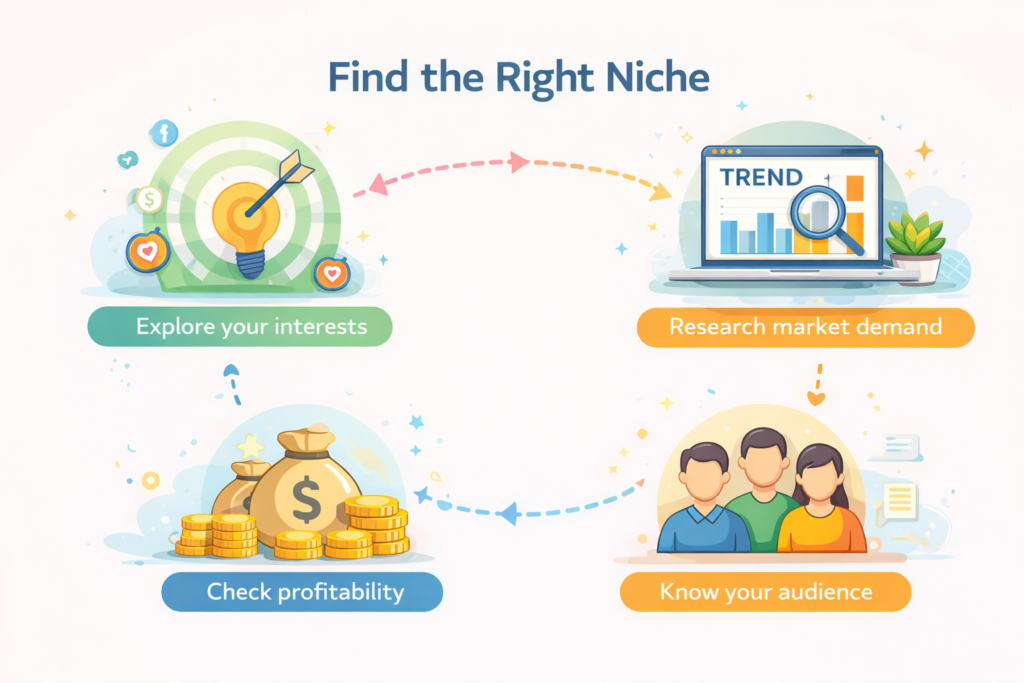
There is virtually no limit when it comes to your choice of subjects. The most crucial thing is that you select a specific topic area that will be the central focus of your entire blog and its content strategy.
- What is a blog niche
- How to choose your blog niche
- Popular blog niche ideas
- Don’t follow trends you don’t love
- Make sure people search for it
- Check if it can make money
- Stay focused
What is a Blog Niche
A blog niche is a specific topic or focused subject area that your blog is built around. Instead of writing about everything, you choose one clear category—such as technology, personal finance, health, travel, or AI tools—and create content mainly within that field. Selecting a niche helps you target the right audience, build authority, improve SEO rankings, and attract loyal readers who are interested in that particular topic. For example, instead of a general tech blog, you might focus only on “AI tools for content creators” or “budget travel in the UAE,” making your blog more specialized and easier to grow.
How to choose your Blog Niche
To choose your blog niche, start by identifying topics you are genuinely interested in and knowledgeable about, then research market demand and competition to ensure people are actively searching for that content. Consider your target audience, your long-term goals (such as monetization or personal branding), and whether the niche has enough subtopics to create consistent content. The best niche is a balance between passion, profitability, and audience demand.
Popular Blog Niche Ideas
These blog topics attract big, active audiences and offer lots of room to grow, monetize and build a community. Blogging for fun, as a side hustle or to support your business? These niches give you plenty of flexibility and potential—especially when you bring your unique voice and experience.
- Tech and gadgets: Reviews, how-tos and insights into the latest devices and trends.
- personal Finance: Budgeting, saving, investing and making money online—finance blogs are always in demand.
- Health and wellness: A health blog can cover everything from fitness routines and nutrition tips to mental health advice and holistic living practices
- Food and recipes: Share meals, diet-specific cooking (vegan, keto or other food blog types) or cultural cuisine.
- Travel: Tips, itineraries and experiences from around the world or your own backyard.
- Parenting: Advice, stories and activities for new parents or families.
- Lifestyle: A broader niche that can include home decor, fashion blogs, productivity or minimalism.
- Beauty and skincare: Tutorials, reviews and routines for makeup and skincare enthusiasts.
Don’t Follow trends you don’t love
Jumping on a trending topic can be tempting when it feels like everyone else is making it work. But if you’re not truly interested, your blog won’t last. Writing about something you don’t care about feels like a chore and readers will notice when you’re not into it. Passion is what keeps your blog going and makes the process more enjoyable.
Make sure people search for it
Before choosing a niche, make sure people are actually searching for it. Use keyword research tools to check search volume, trends, and competition to confirm there is real demand for your topic. If people are consistently searching for related keywords and questions, it means there is an active audience interested in that subject, giving your blog a better chance to grow and attract traffic.
Check if it can make money
Before finalizing your niche, check if it has strong monetization potential. Look for opportunities such as affiliate products, sponsored content, digital products, online courses, or display ads related to the topic. If businesses are already advertising in that niche and people are willing to spend money on related products or services, it’s a good sign that your blog can generate income in the long run.
Stay Focused
Another trap to avoid? Going way too broad. “Lifestyle” might sound cool but it’s too broad. Instead, go for something like “sustainable living for young moms” or “minimalist style for city dwellers.” It gives your blog a clear focus and helps you build a loyal audience. Also stick to your chosen niche—changing topics all the time confuses readers and hurts your SEO.
04. Select a Blog Name and Domain
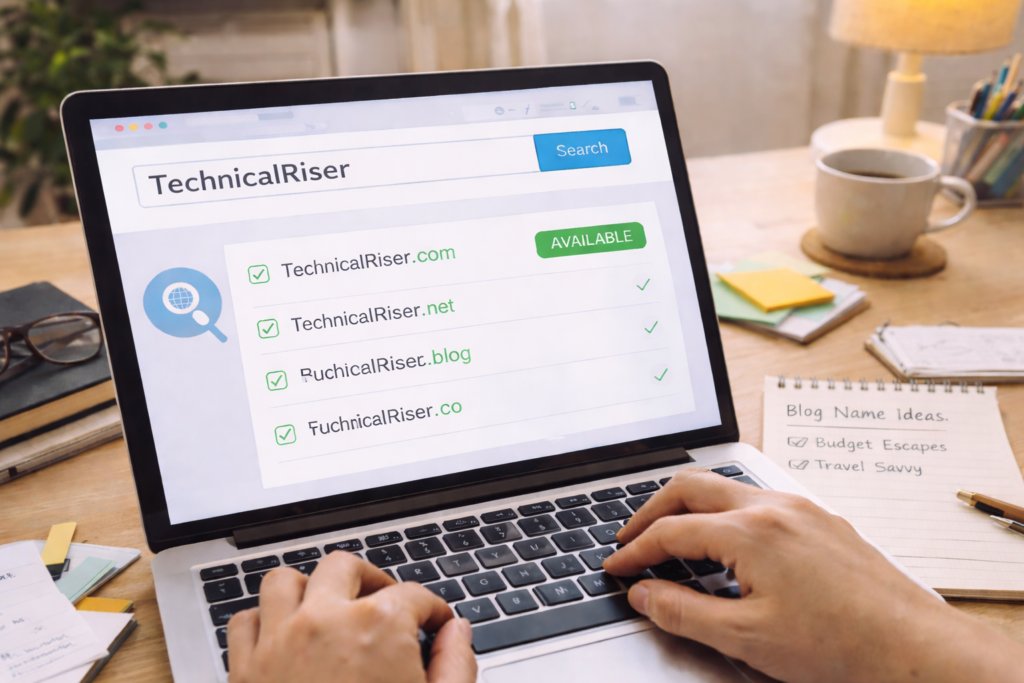
As you think about how to make a blog, the question of what to name it is probably lurking somewhere in the back of your mind.
There are three main routes you can go with your blog’s name. These include:
- Your first and last name
- The name of your business (if you have one)
- A creative new name
When choosing your blog’s name, you should also think about the personality you want it to reflect. Should it be formal and professional? Sweet and romantic? Edgy and offbeat? If you’re stuck on names for your blog, this blog name generator is a helpful source of inspiration.
Once you decide, you should also go ahead and choose your domain name for your blog. Also referred to as a URL, a domain is a site’s address on the web (this website’s domain name, for example, is www.technicalriser.com). Typically, your domain name will be the same as, or at least influenced by, the name of your blog.
Tips for picking a domain name for your blog:
- Keep it short and simple so it’s easy to remember
- Avoid numbers and hyphens, they can be confusing and hard to share
- Try to use keywords related to your blog’s niche.
- Check if the domain name is available using a domain name search.
- Make sure it aligns with your blog name for consistency.
- Prefer .com extension
05. Set up and design your blog
- Choose a blog template
- Decide which pages to include
- Get indexed on search engines
- Create a blog logo
At this point, you’ve chosen a blogging and hosting platform, domain name and blog niche. You’re now equipped with all the basics for setting up your blog. Now i am going to guide you, how to set up and design your blog professionally.
Choose a Blog Template
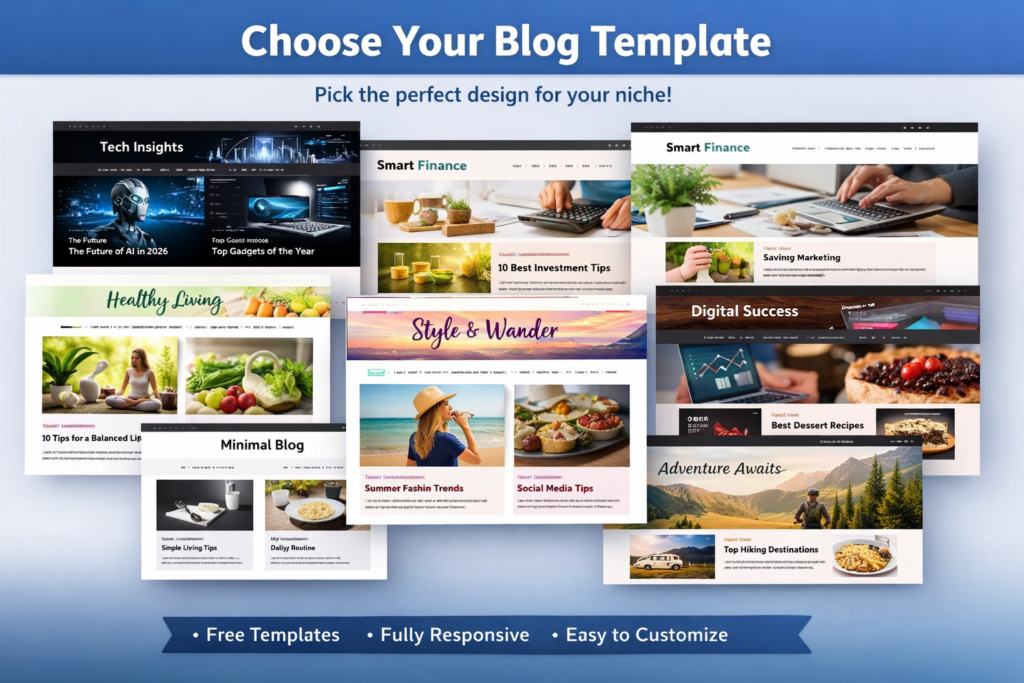
Choosing the right blog template is an important step when starting your blog, as it directly affects user experience and your site’s overall look. A good template should be clean, fast-loading, and mobile-friendly so that visitors can easily read your content on any device. Simplicity is key avoid overly complex designs that can distract readers from your content.
In addition, your template should match your blog’s niche and branding. For example, a tech blog may use a modern and minimal design, while a lifestyle blog might use a more colorful and visual layout. Make sure the template is customizable, SEO-friendly, and compatible with essential plugins, so you can grow and optimize your blog over time.
Decide which Pages to include
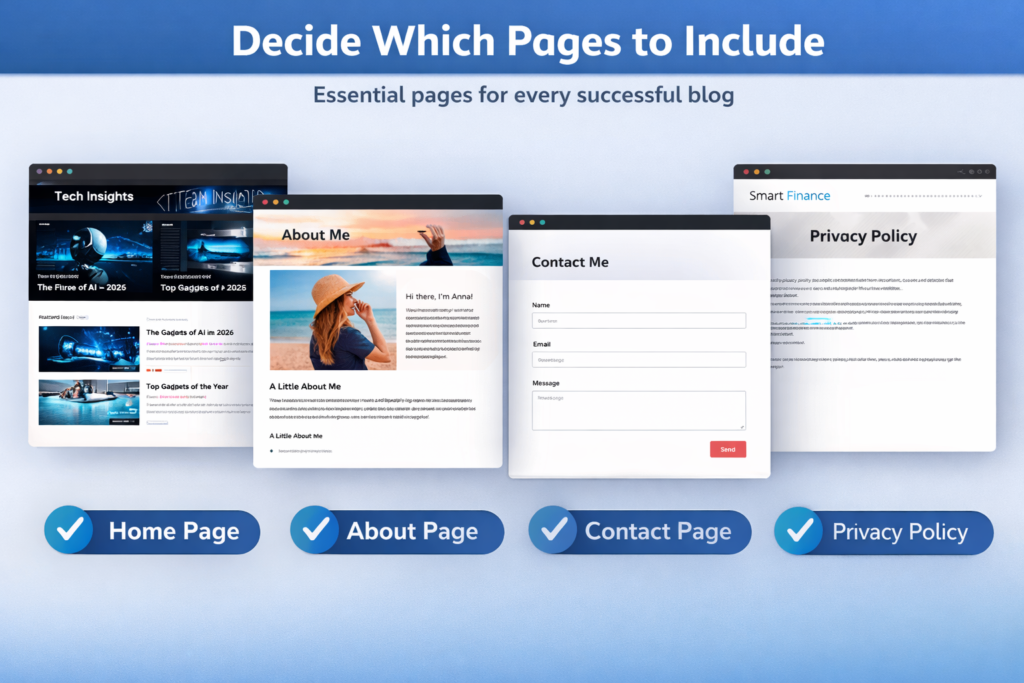
Deciding which pages to include in your blog is essential for creating a professional and user-friendly website. At a minimum, every blog should have a Home page to showcase your latest posts, an About page to introduce yourself and your purpose, and a Contact page so readers or brands can reach you easily. These core pages help build trust and give your blog a complete structure.
In addition, including pages like a Privacy Policy and Disclaimer is important, especially if you plan to monetize your blog. Depending on your niche, you can also add pages such as Services, Portfolio, or Resources to provide more value to your audience. Choosing the right pages ensures your blog looks organized, credible, and ready for growth.
Get Indexed on search engines

Getting indexed on search engines is a crucial step to make your blog visible to a wider audience. Search engines like Google need to discover and store your website pages in their database before they can appear in search results. You can speed up this process by submitting your site to Google Search Console, creating a sitemap, and ensuring your website is properly structured and easy to crawl.
In addition, using basic SEO practices such as targeting relevant keywords, writing quality content, and optimizing titles and meta descriptions will improve your chances of ranking higher. Once your blog is indexed and optimized, it becomes easier for people to find your content organically, helping you grow your traffic over time.
Create a Blog Logo
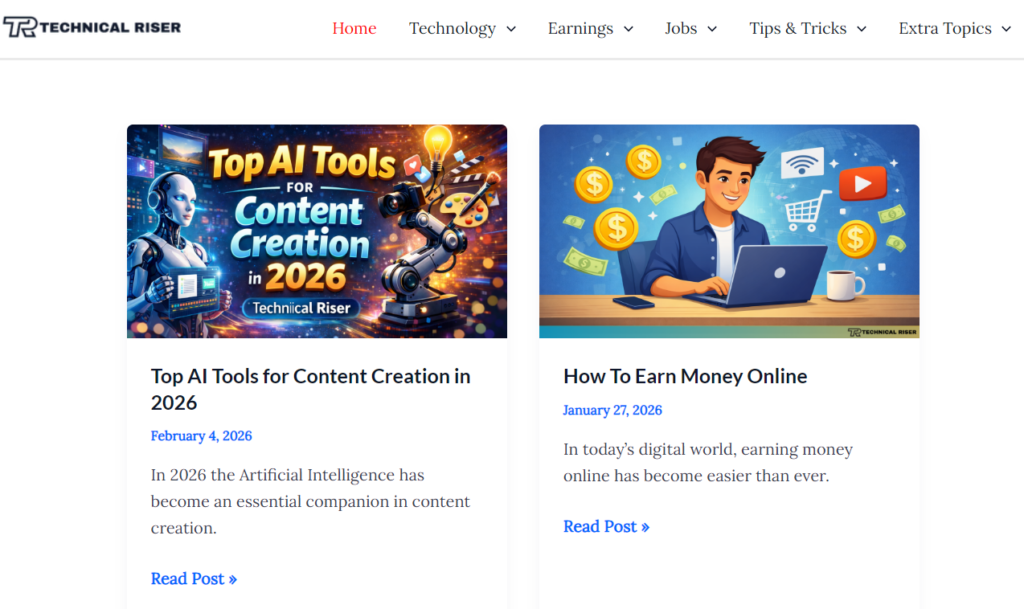
Creating a blog logo is an important step in building your brand identity and making your blog look professional. A well-designed logo helps your audience recognize your blog instantly and creates a strong first impression. It should be simple, memorable, and relevant to your niche, whether you’re running a tech blog, lifestyle site, or personal brand.
When designing your logo, choose clean fonts, a suitable color scheme, and a style that reflects your content. You can use free tools like Canva or logo makers to create a high-quality design without needing advanced skills. A good blog logo not only improves your site’s appearance but also builds trust and credibility with your audience over time.
06. Brainstorm Blog Topics
It’s time to start thinking about which topics you’ll get started with. Begin by thinking about your experiences, successes, failures or discoveries related to your niche. What insights can you share? What ideas are you looking to explore in-depth?
The good news is that brainstorming blog topics is a skill you can develop—and once you master it, you’ll never run out of ideas again.
Why Brainstorming Blog Topics Matters
Creating high-quality content consistently is key to growing your blog. Brainstorming helps you:
- Generate fresh and unique ideas
- Stay consistent with posting
- Target your audience’s interests
- Improve your SEO rankings
Some Effective ways to Brainstorm Blog Topics
- Understand Your Audience: Think about your readers. What problems are they facing? What questions do they ask? Write content that solves their issues.
- Check Competitor Blogs: Look at other blogs in your niche. Identify what topics perform well and create better, more detailed versions.
- Use Keyword Research: Search for popular keywords in your niche. Tools like Google Trends or keyword planners can help you find what people are searching for.
- Use “How-To” Formats: “How to” posts are always popular. for example: ‘How to start trading in 2026’, ‘How to build a profitable blog’.
- Answer Common Questions: Visit forums, Quora, or comment sections. Real questions from real people can inspire great blog topics.
07. Write Your First Blog Post
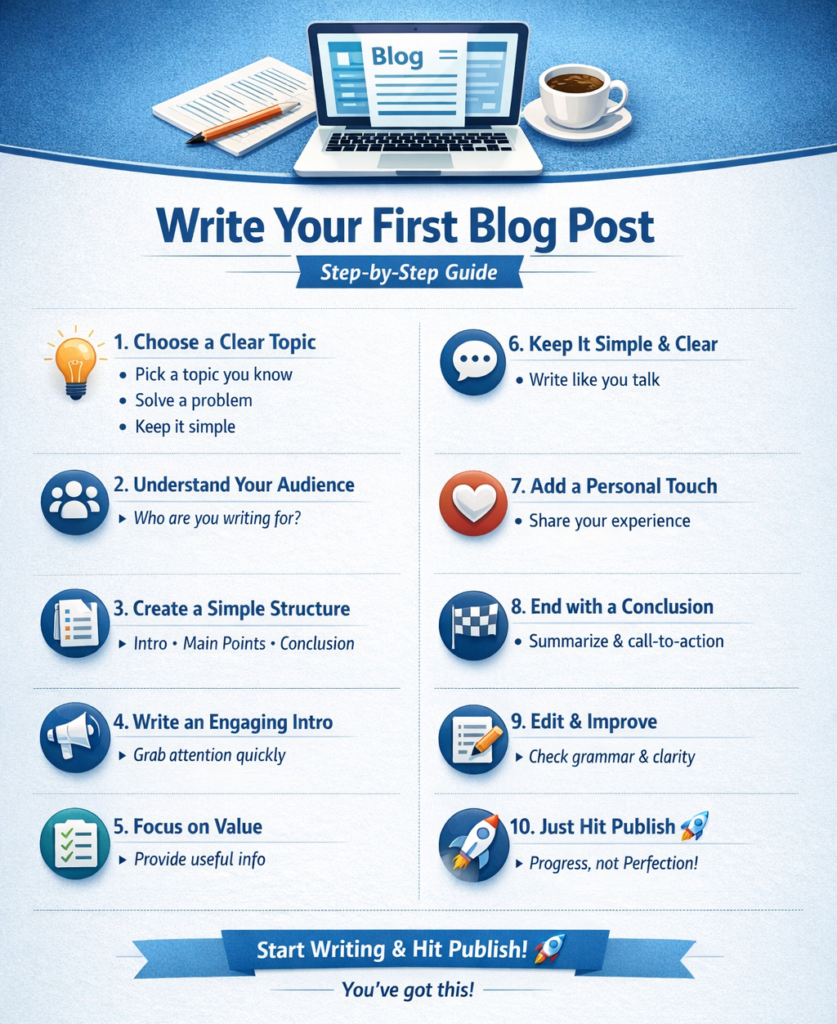
Writing your first blog post starts with choosing a clear and focused topic that solves a specific problem or shares something valuable. Once you know what you’re writing about, think about your audience, are they beginners or experienced readers? This helps you decide how simple or detailed your explanation should be. Structure your post properly with an introduction, main content, and a conclusion so it’s easy to follow. Your introduction should grab attention quickly, while the main content should provide useful, practical information in a simple and easy-to-read way using short paragraphs, headings, and examples.
As you write, keep your language clear and natural, just like you’re explaining something to a friend, and don’t forget to add a personal touch to make your content more relatable. End your post with a strong conclusion that summarizes the key points and encourages readers to take action. Before publishing, always review and edit your content for clarity and mistakes. Most importantly, don’t wait for perfection just hit publish. Your first post is about starting, learning, and improving with every step forward.
08. Create an Editorial Calendar
Creating an editorial calendar helps you stay organized and consistent with your blog content. Instead of deciding topics at the last minute, you plan everything in advance. This makes your workflow smoother and more professional.
Start by deciding how often you want to publish weekly or bi-weekly is great for beginners. Then list your blog ideas and assign them to specific dates. This helps you stay on track and avoid missing posts.
You can use simple tools like Google Sheets, Notion, or even a notebook to manage your calendar. Add details like post titles, keywords, and publishing status so you always know what’s coming next.
An editorial calendar also helps you balance your content. You can mix tutorials, guides, and trending topics to keep your blog interesting. It ensures you provide consistent value to your readers.
Most importantly, stay flexible. Plans can change, and that’s okay. Update your calendar when needed, but keep moving forward. Consistency is the key to growing your blog.
09. Promote Your Blog
- Share on social media
- Create a blog newsletter
- Write for other sites and consider guest blogging
- Reach out to an existing community
- Participate in question and discussion sites
- Invest in paid ads
- Try new content formats
- Add videos to your blog
- Network for backlinks
- Build an email list
You can promote your blog on different platforms like social media, newsletter, email list and so on which increase your audiences and followers easily.
10. Make Money Blogging
You can make money from your Blogs by using different types of methods some of them are listed below:
- Affiliate Marketing: Promote products or services and earn a commission for every sale made through your referral links.
- Advertise Within Your Blog: Display ads on your website and earn money based on clicks or impressions from your visitors.
- Offer Paid Subscriptions: Provide exclusive content or benefits to users who pay a monthly or yearly subscription fee.
- Write Sponsored Content: Collaborate with brands to create posts that promote their products in exchange for payment.
- Sell E-books and Merchandise: Create and sell digital books, guides, or branded products to generate income from your audience.
- Create and Sell Online Courses: Teach your knowledge through structured courses and earn money from student enrollments.
- Provide Consulting Services: Offer your expertise as a paid service to help others solve problems or improve their skills.
- Explore Diverse Income Streams: Combine multiple monetization methods to increase and stabilize your blog income.
- Build a Strong Brand: Develop trust and authority in your niche so people recognize and choose your content and services.
Conclusion
Starting a blog in 2026 is easier than ever, but success depends on consistency, strategy, and patience. By choosing the right niche, creating valuable content, and using smart promotion techniques, you can build a blog that grows steadily over time. Focus on helping your audience, stay updated with trends, and keep improving your skills.
Remember, every successful blogger started from zero. Don’t wait for perfection start now, stay consistent, and learn as you go. With dedication and the right approach, your blog can turn into a powerful platform for sharing ideas, building a brand, and even earning income in the future.